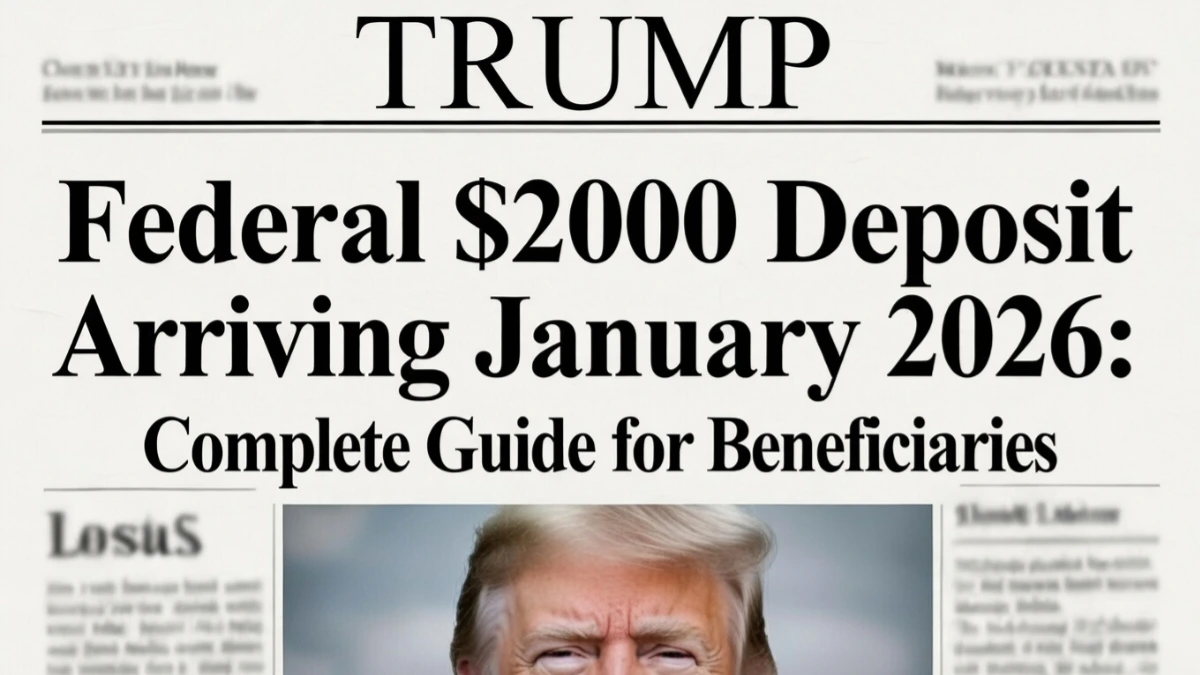
Federal $2000 Deposit Arriving January 2026: As January 2026 approaches, many Americans are once again seeing claims online about a federal $2,000 deposit. These messages are appearing on social media feeds, private messaging apps, and video platforms. Posts often include screenshots and short clips with strong captions saying the payment is “approved” or “confirmed.” For families dealing with high rent, medical expenses, and rising prices, this idea feels hopeful and believable.
The claim feels especially convincing because it arrives during a time of financial stress. Many households are still adjusting to inflation and higher living costs. When money is tight, even an unconfirmed promise of relief can feel real enough to influence decisions. That is why understanding this claim matters.
Why This $2,000 Story Keeps Returning
This is not the first time Americans have heard about a possible $2,000 federal payment. Similar stories have appeared many times since the pandemic years. These claims often resurface around tax season or during moments of economic uncertainty. Each time, the message spreads quickly and gains attention.
यह भी पढ़े:
 2026 IRS Income Tax Refund: What Americans Should Know About Refund Timing and Filing in 2026
What makes the January 2026 version stand out is how well it is framed. It uses familiar language from past stimulus programs and mixes it with bits of policy discussion. This blending makes it hard for people to separate fact from assumption, leading to confusion and mixed expectations.
The Pandemic Era That Shaped Expectations
The origin of this belief goes back to 2020 and 2021. During the pandemic, the government sent multiple rounds of stimulus payments. Many of those payments arrived directly in bank accounts with little warning. This changed how people think about government assistance.
Over time, the number $2,000 became a symbol of federal relief. Even years later, that memory still influences how people react to online claims. When people see that familiar number, they often assume help is coming again.

How Online Clips Turn Discussion Into “Confirmation”
In recent months, pieces of political speeches and economic discussions have been shared online without full explanation. Ideas such as tax rebates or one-time payments were discussed in theory, not approved in law. However, once these clips were shortened and reshared, their meaning changed.
By the time these posts reached large audiences, early-stage discussions looked like final decisions. The careful language was removed, and speculation was presented as fact. This is how uncertainty slowly turned into confident claims.
What Federal Agencies Are Officially Saying
Despite all the online attention, federal agencies have not announced any universal $2,000 payment for January 2026. The IRS, the US Treasury, and the Social Security Administration have made no such confirmation. There is no law passed by Congress and no funding approved for this purpose.

Large federal programs always leave public records. Hearings, draft laws, and official notices appear long before money is sent. Since none of these steps have occurred, there is no official support for the claim.
Why Some Americans Will Still See Large Deposits
One reason the rumor feels real is the timing. Early 2026 is also tax season. Millions of Americans will receive tax refunds during this period. For families who qualify for refundable tax credits, refunds can easily reach or exceed $2,000.
When these refunds arrive labeled as “US Treasury,” they can look like stimulus payments. When people share these deposits online without context, others may assume a new federal payment has started.
यह भी पढ़े:
 $2,000 Direct Deposit January 2026: Who Qualifies, When Payments Arrive, and What’s Official
Other Payments That Add to the Confusion
Some Americans may also receive legitimate payments for other reasons. These include amended tax refunds, delayed returns, or corrections from previous years. Veterans, federal employees, and military families may receive specific benefit adjustments or back pay.
These payments are real, but they apply only to certain individuals. When screenshots of these deposits are shared online without explanation, they add to the belief that everyone is receiving money.
How Context Gets Lost on Social Media
Social media spreads information fast but often without details. A single image of a bank deposit can be taken as proof of a nationwide program. Important information like eligibility rules or payment reasons is usually missing.

Once a number like $2,000 starts trending, people assume it applies to everyone. The explanation rarely travels as far as the headline, leading to misunderstanding rather than clarity.
Scams That Grow From False Payment Claims
Whenever rumors of government payments spread, scams follow quickly. Fake messages and emails promise to help people “unlock” or “claim” the January 2026 $2,000 deposit. These messages often look official and ask for personal or banking details.
Federal agencies do not contact people through unsolicited texts or social media messages. Financial stress makes people more likely to trust false promises. Falling for these scams can lead to serious financial and identity loss.

Why People Keep Believing the Claim
The continued spread of this story reflects deeper economic pressure. Many families are still struggling with debt, high costs, and limited savings. In such conditions, hope spreads easily, even when it is not confirmed.
Social media platforms also reward confident claims over careful explanations. When a message is repeated often enough, it begins to feel true. Familiarity replaces verification, making false information harder to challenge.
What Real Federal Relief Would Look Like
If a real federal payment were approved, the process would be very public. Congress would debate it, official websites would publish details, and agencies would coordinate announcements. None of this would happen quietly.

Experts believe any future relief is more likely to be targeted rather than universal. Tax credits or benefit expansions are seen as more practical options. Until official documents are released, claims about a January 2026 payment remain unconfirmed.
How to Stay Informed Without Panic
Staying informed requires checking official sources like IRS and Treasury websites. Reading full explanations instead of headlines helps avoid stress. Any deposit from the US Treasury should be matched with a known reason, such as a tax refund.
Skepticism is not negativity. It is protection. Government programs rely on paperwork and public announcements, not viral posts.

As of now, there is no confirmed universal federal $2,000 deposit scheduled for January 2026. Most payments around that amount are likely tax refunds or individual adjustments. The rumor continues because of economic pressure and online repetition.
Understanding the difference between hope and policy helps protect finances and expectations.
Disclaimer
This article is for informational and journalistic purposes only. It is based on publicly available information at the time of writing and does not provide financial, tax, or legal advice. Government policies, benefit programs, and payment schedules may change. Readers should consult official US federal agency websites or qualified professionals for guidance related to their individual situation.