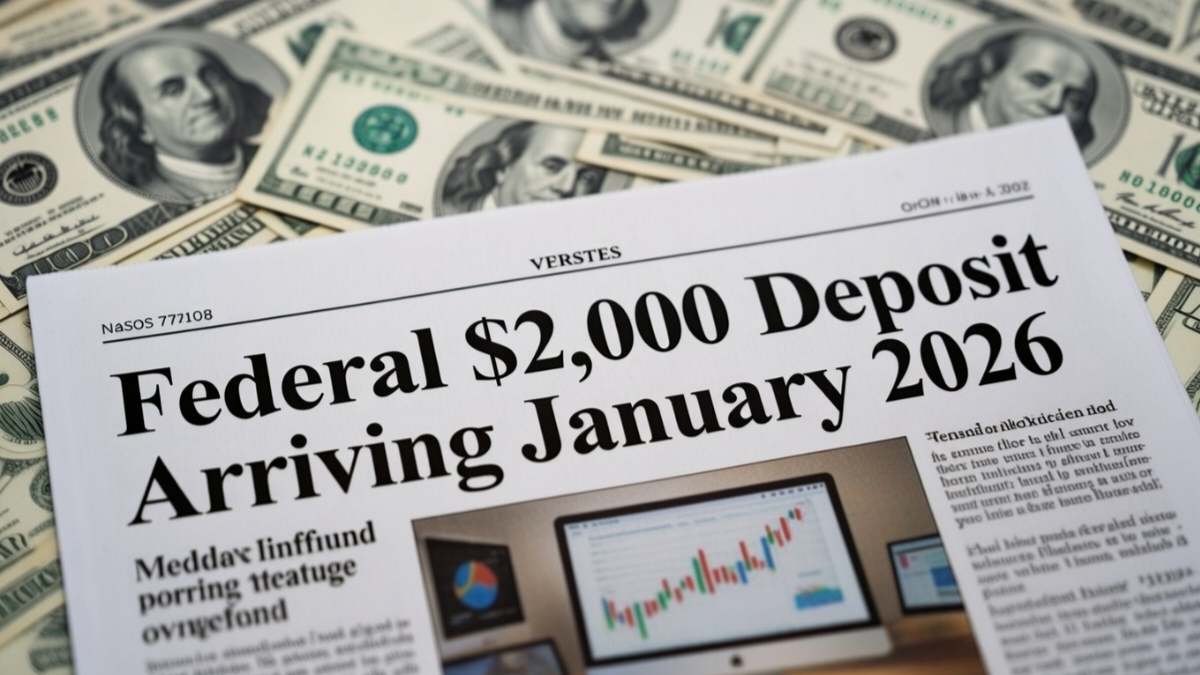
Federal $2000 Deposit Arriving January 2026: As January 2026 approaches, online platforms are once again filled with claims about a federal $2,000 deposit arriving for Americans. Social media posts confidently share payment dates, eligibility charts, and messages stating the payment is already approved. For households dealing with rising rent, food prices, and healthcare costs, such news feels comforting and hopeful.
However, the reality is far more cautious. No federal agency has announced a nationwide $2,000 payment scheduled for January 2026. Understanding the truth behind these claims is important to avoid confusion, disappointment, and financial scams.
How the $2,000 January 2026 Story Started
The idea of a $2,000 federal deposit is strongly linked to memories from the pandemic years. During that time, Americans received stimulus payments directly into their bank accounts. These payments created a lasting connection between financial hardship and large federal deposits.
यह भी पढ़े:
 2026 IRS Income Tax Refund: What Americans Should Know About Refund Timing and Filing in 2026
Since then, any discussion of economic relief often triggers expectations of similar payments. Over time, this expectation has turned into repeated rumors, even when no new relief programs are approved.
Political Discussions Often Get Misunderstood
Another reason these claims spread is the way political discussions are shared online. Lawmakers frequently talk about possible tax relief, rebates, or economic support. These conversations are part of debate, not final decisions.
When such discussions are posted online, context is often removed. A proposal mentioned during a speech may quickly be described as a confirmed plan. As the information spreads, it becomes harder to separate ideas from actual policy.
What Federal Agencies Are Officially Saying
Despite the volume of online claims, federal agencies have been clear. The IRS, the U.S. Treasury, and the Social Security Administration have not announced a universal $2,000 deposit for January 2026. No law authorizing such a payment has passed Congress.
Large federal payments follow a transparent process. Laws are debated publicly, funding is approved, and agencies issue official notices. None of these steps have occurred for a January 2026 payment.
Why Some People May Still Receive $2,000 Deposits
Confusion continues because some Americans will receive deposits close to $2,000 early in 2026. These payments are not new stimulus checks. They are routine deposits linked to personal financial situations.

Most commonly, these deposits are federal tax refunds. Refund amounts can vary widely depending on income, tax credits, and withholdings, sometimes reaching or exceeding $2,000.
Tax Refunds Often Look Like Stimulus Payments
When a bank statement shows a deposit from the U.S. Treasury, it can easily be mistaken for a stimulus payment. Many people assume any Treasury deposit means new government relief.
In reality, most early-year Treasury deposits are tax-related. Refundable credits can increase refund amounts significantly, especially for working families. Without explanation, these deposits feed the stimulus rumor cycle.
यह भी पढ़े:
 $2,000 Direct Deposit January 2026: Who Qualifies, When Payments Arrive, and What’s Official
Targeted Federal Payments Add to the Confusion
Some federal payments are meant only for specific groups. Veterans, military personnel, and federal employees may receive bonuses, adjustments, or delayed payments. These payments are legitimate but limited in scope.
When news of these payments spreads online, eligibility details are often ignored. A payment meant for a small group gets described as available to everyone, which misleads many readers.
Scams Thrive When Payment Rumors Spread
Whenever rumors of large federal payments appear, scammers quickly take advantage. Fake messages claim that people must confirm personal information to receive the $2,000 deposit. These messages often look official and urgent.

Federal agencies do not contact people through unsolicited texts or social media. No legitimate payment requires upfront fees or sharing banking details through random messages. These scams are a serious risk.
Why the Rumors Continue Despite Official Denials
Even after agencies deny the claims, the story does not disappear. One reason is financial stress. Many families are struggling to keep up with daily expenses and want to believe help is coming.
Social media also rewards confidence over caution. Posts declaring “checks approved” spread faster than careful explanations. Repetition makes the claim feel familiar, and familiarity is often mistaken for truth.

What Real Federal Relief Would Look Like
If a genuine federal payment were approved in the future, it would not happen quietly. Congress would debate the bill publicly, and agencies would issue coordinated announcements. Payment schedules would appear on official websites.
Experts believe future relief, if approved, would likely be targeted rather than universal. Support may come through tax credits, benefit increases, or specific aid programs instead of one payment for everyone.
How to Stay Informed Without False Hope
The best way to stay informed is to rely on official government sources. Checking IRS and Treasury websites provides accurate and updated information. Bank deposits should always be matched with known benefits or refunds.

Claims that pressure people to act quickly should be treated with caution. Verifying information before believing it helps protect both finances and personal data.
There is no confirmed federal $2,000 deposit scheduled for January 2026. Most claims are based on misunderstandings, recycled information, or online exaggeration. While some people may receive similar amounts, those payments are routine and personal.
Staying patient and informed is the safest approach. Clear facts from official sources are far more reliable than viral posts promising guaranteed money.

Disclaimer
This article is for informational and journalistic purposes only. It does not provide financial, tax, or legal advice. Government policies, benefit programs, and payment schedules may change at any time. Readers should verify information through official federal agency websites or consult qualified professionals for guidance related to their personal situation.